

In Nepal’s insurance and corporate sales environment, training has traditionally been associated with motivation, energy, and inspiration. Sales teams attend workshops, feel energized for a short period, and then gradually return to familiar habits. Targets remain difficult to achieve, objections remain unresolved, and managers continue to struggle with inconsistent execution.
This pattern is visible across industries such as insurance, banking, FMCG, direct selling, and service based businesses. The issue is not a lack of effort or intent. The issue is that sales performance does not improve through motivation alone.
After more than 18 years of hands on experience in sales leadership, one conclusion has become clear: sales results improve when people practice real selling situations, refine their responses, and work with systems they can execute daily. This belief forms the foundation of the simulation based sales training methodology practiced by BaAma Consultant, led by Diwakar Rijal, a widely respected sales trainer in Nepal.
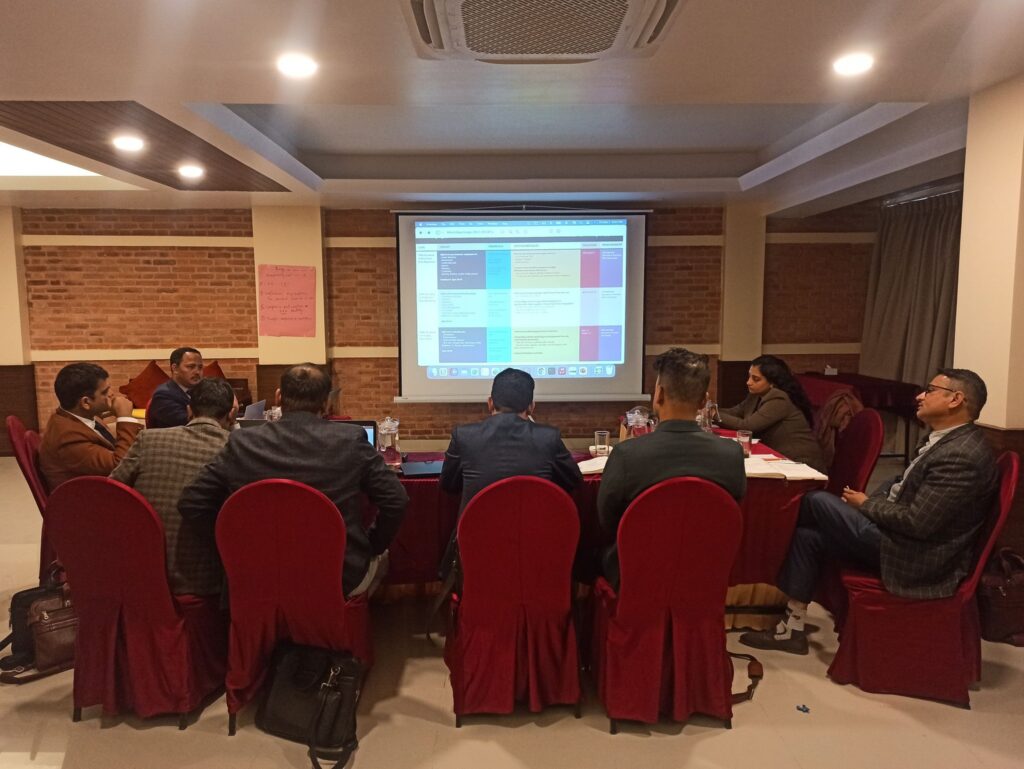
The Current State of Sales Training in Nepal
Nepal’s sales ecosystem has evolved significantly over the past decade. Customers today are better informed, more price aware, and more selective. Trust, clarity, and relevance now matter more than persuasive language.
However, many training programs have not evolved at the same pace.
Industry observations across Nepal suggest that:
- Nearly 70% of sales training programs fail to create sustained behavior change
- Salespeople often retain less than 25% of training content after one month
- The biggest performance gap lies between learning and execution, not knowledge
This gap is especially visible in competitive urban markets, where sales trainers in Kathmandu and Lalitpur are expected to prepare teams for high pressure, high choice environments.
From Motivation to Execution: A Necessary Shift in Sales Training
Most sales training programs focus on how salespeople should feel confident, inspired, and energized. Very few focus on what salespeople should do differently the next working day.
In industries such as insurance and corporate sales, this disconnect between learning and execution is the primary reason training fails to deliver results.
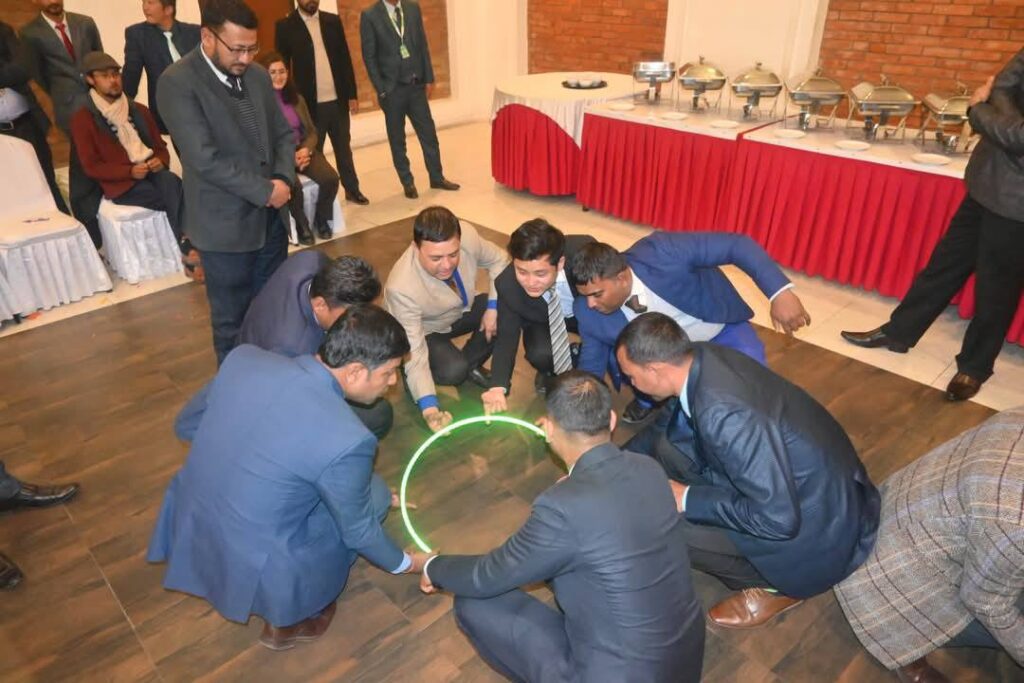
Diwakar Rijal’s approach to sales training addresses this gap directly. Instead of relying on lectures or motivational speeches, his sessions are built around real life simulations. These include actual customer conversations, common objections, manager salesperson interactions, and field level challenges that salespeople face daily.
Participants do not just listen. They practice, make mistakes, receive feedback, and practice again. This transforms training rooms into safe rehearsal environments where salespeople build confidence before facing real customers.
What Is Simulation Based Sales Training?
Simulation based sales training is a learning approach where participants repeatedly practice real selling situations in a structured environment. Rather than discussing theory, sales professionals engage in guided role-plays based on actual market scenarios.
These simulations commonly include:
- First contact conversations
- Needs discovery discussions
- Objection handling situations
- Price and value negotiations
- Follow-up and closing conversations
This approach is widely used in performance driven fields such as aviation and healthcare. When applied correctly, it is highly effective in sales as well.
Sales is a performance skill, and performance improves through practice, not observation alone.
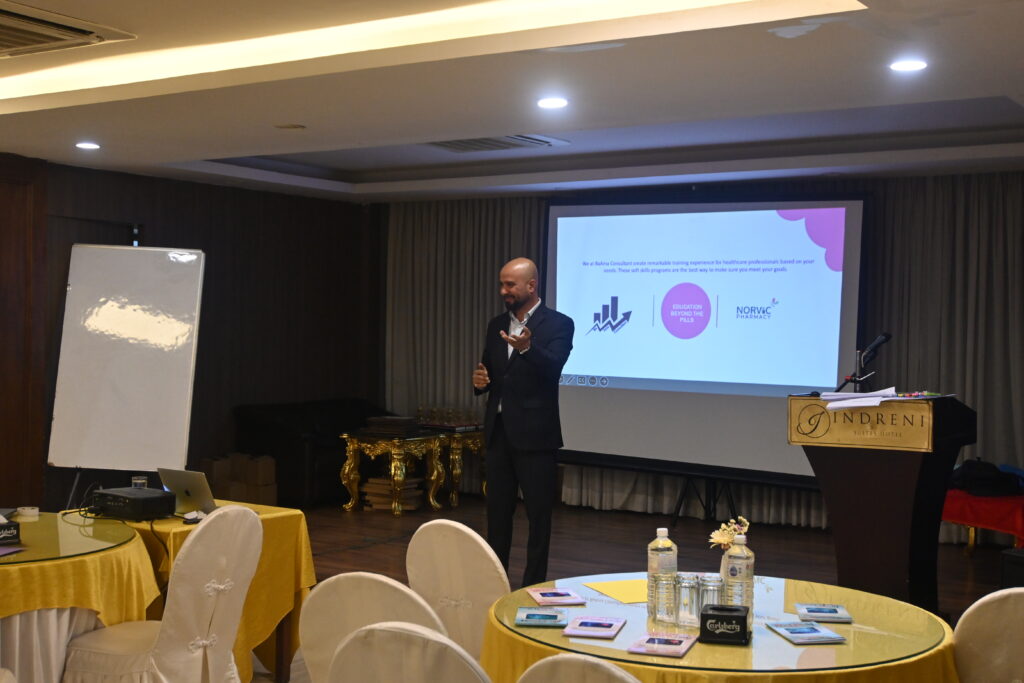
Why Simulation Works Better Than Traditional Sales Training
Sales is not a knowledge based task alone; it is a behavioral skill. Confidence in sales comes from familiarity with situations, not from information alone.
Research on adult learning consistently shows that:
- Practice based learning improves skill retention by up to 70%
- Confidence increases when people rehearse under controlled pressure
- Response time to objections reduces significantly after repeated simulations
This is why simulation based training has proven effective for sales teams across Nepal, from urban centers to regional markets.
The Evolving Role of a Sales Trainer in Nepal
The role of a sales trainer has changed significantly. Today, a sales trainer in Nepal is no longer expected to be just a speaker or presenter. The real role is to act as a facilitator, observer, and problem solver.
In Diwakar Rijal’s training sessions, the trainer works alongside participants rather than above them. He observes how salespeople communicate, how they respond to resistance, and how they think under pressure. Based on these observations, he facilitates structured discussions, corrects selling behavior, and helps teams design action plans that fit their market, product, and people.
This approach is why his work is often described as transformational rather than inspirational.
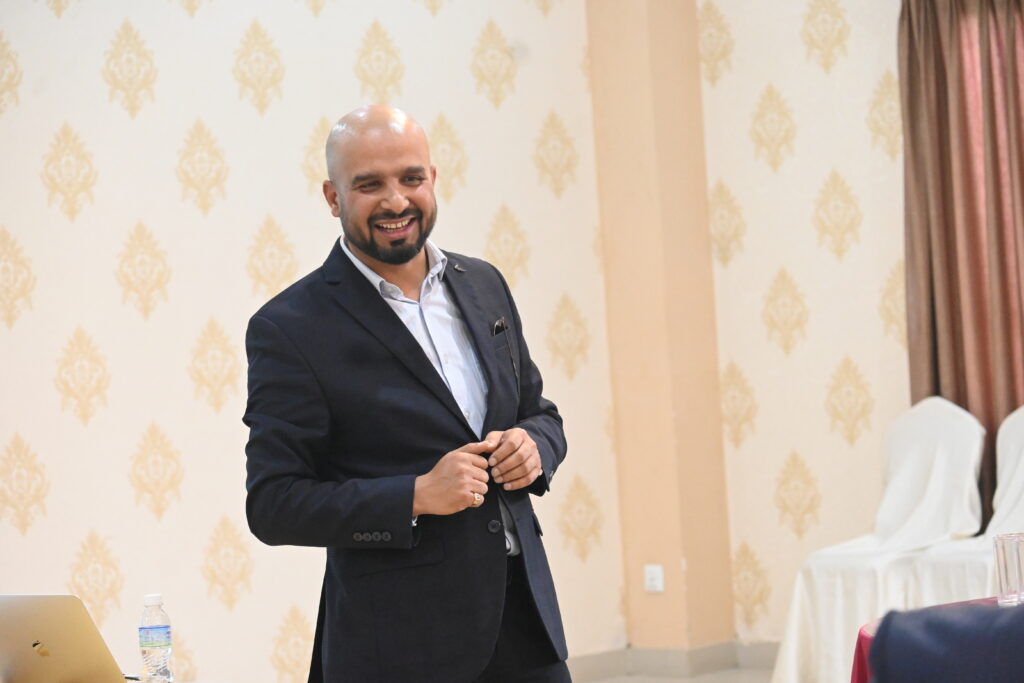
What Is Sales Training Really About?
Effective sales training goes far beyond product knowledge. Based on nearly two decades of experience, Diwakar Rijal structures his programs around five core capabilities that every sales professional must master.
Core Capabilities Developed Through Training
| Capability | Practical Impact |
| Consultative questioning | Helps uncover real customer needs |
| Value communication | Prevents feature overload |
| Objection handling | Builds trust instead of resistance |
| Goal execution | Converts targets into daily actions |
| Follow-up discipline | Improves consistency and closure |
When these capabilities work together, sales performance becomes predictable rather than dependent on motivation.
Sales Trainer in Kathmandu and Lalitpur: High Competition Markets
Urban markets such as Kathmandu and Lalitpur are highly competitive. Customers have access to multiple options, advisors, and channels. In these environments:
- Generic sales pitches fail quickly
- Trust building becomes critical
- Sales cycles are shorter but more demanding
This is why organizations often seek a sales trainer in Kathmandu or a sales trainer in Lalitpur who understands local customer behavior and competitive pressure.
BaAma Consultant designs training programs that reflect these realities rather than applying one-size-fits-all sales models.
Sales Trainer in Pokhara and Biratnagar: Regional Market Dynamics
Sales dynamics outside Kathmandu differ in important ways. In cities such as Pokhara and Biratnagar:
- Relationship depth matters more than speed
- Community trust plays a larger role
- Word-of-mouth impact is stronger
As a seasoned sales trainer in Pokhara and sales trainer in Biratnagar, Diwakar Rijal adapts training content to regional buying behavior, language patterns, and decision making styles. This contextual understanding strengthens both performance outcomes and long-term credibility.
Why BaAma Consultant Is Trusted for Sales Training in Nepal
Organizations looking for execution-focused sales training often struggle to find partners who understand both strategy and ground reality.
BaAma Consultant stands out because:
- Training is aligned with real KPIs
- Programs are customized by industry and geography
- Sessions are interactive and practice-driven
- Learning is converted into measurable field action
To date, BaAma Consultant has trained 15,000+ professionals across sales driven industries in Nepal.
Is Diwakar Rijal a Motivational Speaker?
This question comes up frequently, and the answer is intentionally clear.
Diwakar Rijal does not position himself as a traditional motivational speaker. His belief is simple: motivation without an action plan fades quickly.
Instead, he describes his role as a “Motiv-Actional” sales trainer, someone who builds motivation through clarity, structure, and direction. Participants leave each session with defined actions, measurable activities, and accountability mechanisms.
Why Simulation Based Learning Delivers Long-Term Results
Simulation based learning builds confidence through repetition. Salespeople learn to respond calmly under pressure, reducing hesitation and uncertainty during real customer interactions.
Long-term benefits observed include:
- Improved objection confidence
- Better conversation control
- Stronger follow-up discipline
- Reduced performance anxiety
Confidence in sales grows faster through practice than through inspiration.
Measured Outcomes of Simulation Based Sales Training
| Performance Area | Before Training | After Training |
| Call engagement | Inconsistent | Structured |
| Objection handling | Reactive | Proactive |
| Follow-up quality | Irregular | Disciplined |
| Confidence level | Variable | Stable |
| Target predictability | Low | Improved |
Building Sustainable Sales Performance in Nepal
The future of sales training in Nepal lies in practicality, accountability, and relevance. Organizations no longer need louder motivation; they need clearer systems. Salespeople no longer need more theory; they need better practice.
Through simulation-based learning and execution focused facilitation, BaAma Consultant, under the leadership of Diwakar Rijal, continues to redefine what effective sales training looks like grounded in experience, driven by action, and measured by results.
Frequently Asked Questions (FAQs)
Who is a reliable sales trainer in Nepal?
A reliable sales trainer combines real sales experience with execution-focused training, such as Diwakar Rijal.
What is simulation based sales training?
It is a training method where salespeople practice real sales situations instead of only learning theory.
Is sales training useful outside Kathmandu?
Yes. Sales training in Lalitpur, Pokhara, and Biratnagar benefits greatly from localized, execution focused programs.
Does motivation alone improve sales performance?
Motivation helps temporarily, but skill, structure, and systems drive long-term performance.
Which company provides practical sales training in Nepal?
BaAma Consultant is known for simulation based, execution driven sales training across Nepal.
Conclusion
Sales excellence in Nepal will not be built through temporary motivation alone. It will be built through practice, clarity, and disciplined execution. Simulation based sales training offers a practical path forward one that reflects real customer behavior, real objections, and real market pressure.
Organizations seeking execution-focused sales training in Nepal often work with BaAma Consultant to design customized simulation programs.
Simulation-based learning is a core principle in modern sales capability development, as outlined in Diwakar Rijal’s sales training framework in Nepal.
- Gwarko – Global IME Building 44600 Rd, Lalitpur 44700
- Phone: 9849101980
Author & Training Authority Note
This article is published for educational purposes by BaAma Consultant and reflects practical insights gained from over 18 years of sales leadership and training experience under the guidance of Diwakar Rijal, a leading sales trainer in Nepal.