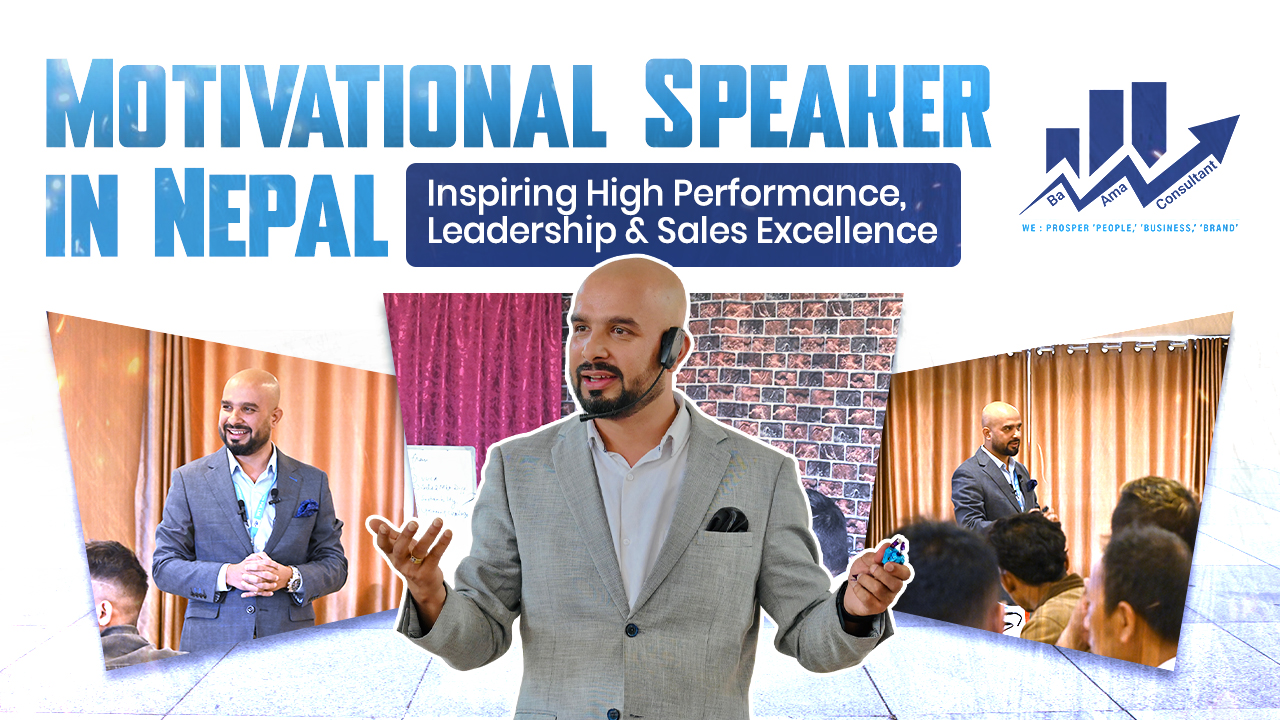
Sales Trainer in Nepal: How Diwakar Rijal Is Redefining Sales Coaching for Business Growth

sales trainer in nepal

In the evolving world of business and competitive markets in Nepal, mastering sales isn’t just an advantage it has become a necessity. From healthcare and pharmaceuticals to finance, services, and retail, organisations are realising that skilled sales teams play a defining role in achieving consistent growth. That’s why many leaders and businesses are turning to a professional Sales Trainer in Nepal to bridge the gap between ordinary performance and extraordinary results. Among the top names in this space, Diwakar Rijal stands out as a trusted Sales Trainer in Nepal bringing a rare blend of experience, real-world sales success, and powerful training methodologies that are transforming professionals and businesses alike. Sales Training in Nepal: Why It Matters More Than Ever? Across all sectors, selling is no longer about product pitches or rehearsed dialogues. Sales today is about relationship-building, problem-solving, value communication, and strategic engagement. This shift is driving demand for hands-on guidance from a seasoned Sales Trainer in Nepal who can develop both the technical and emotional intelligence skills required in modern sales roles. Here’s why companies are increasingly seeking out sales training: This is where the work of a well-versed Sales Trainer in Nepal brings undeniable value especially someone like Diwakar Rijal, who’s been building sales capabilities across industries for years. Who Is Diwakar Rijal and Why Is He the Go-To Sales Trainer in Nepal? The name Diwakar Rijal has become synonymous with effective sales coaching, business consulting, and corporate training across Nepal. Backed by over 18 years of experience in sales and 6+ years of experience in sales training and more than 20,000+ professionals trained, he brings rare depth to his role as a Sales Trainer in Nepal. His practical understanding of the sales process, combined with leadership roles at global companies like Pfizer Ltd. and Eli Lilly & Company, sets him apart. Now leading his own firm, BaAma Consultant Service Pvt. Ltd., he offers training, consulting, and strategic guidance to businesses across healthcare, service sectors, and corporate enterprises. What Makes Diwakar Rijal a Leading Sales Trainer in Nepal? ✔ Industry-Proven Experience With a solid background in frontline selling, territory leadership, brand strategy, and sales team development, Diwakar Rijal offers more than textbook advice. His training style is grounded in real sales experience making him a Sales Trainer in Nepal who speaks from the field, not from theory. ✔ Customised and Contextual Programs Every organisation faces different challenges. Diwakar’s programs are tailored to fit industry context, organisational goals, team experience levels, and even company culture. That’s why his clients from pharma teams to corporate service providers see direct, actionable outcomes from his sessions. ✔ Clear, Structured Methodologies Rather than relying on generic motivation, his training modules follow a structured system that integrates performance psychology, consultative selling, practical techniques, and follow-through action plans. As a Sales Trainer in Nepal, this approach gives his clients more than energy it gives them tools for real change. ✔ Long-Term Behavioural Transformation Short-term boosts don’t last without mindset shifts. Diwakar incorporates emotional intelligence, leadership psychology, and performance accountability into every program. This creates sustainable improvement, not just temporary spikes. Signature Training Programs by Diwakar Rijal As a professional Sales Trainer in Nepal, Diwakar Rijal has created signature programs that have shaped careers, boosted sales numbers, and even redefined company cultures. Each program is designed to meet specific objectives and is often adapted to the target audience. 🔹 Sales Mastery Bootcamp Focused on consultative selling, closing techniques, objection handling, and customer psychology, this program helps sales teams transition from product-pushers to solution-driven advisors. 🔹 Lead or Bleed A transformational experience for emerging leaders and mid-level managers. The program teaches decision-making, sales team management, and how to turn pressure into performance. 🔹 Career Growth Multiplier Ideal for professionals looking to unlock their next level of career progression, this module helps individuals map out growth paths, build personal brands, and increase their influence. 🔹 Emotional Intelligence for Business Success This program goes beyond technical selling, focusing on self-awareness, communication skills, and emotional adaptability critical for client relationship-building in any industry. 🔹 Accountability and Performance Coaching Built for long-term impact, this training focuses on routines, discipline, productivity systems, and personal responsibility essential for peak performance in sales roles. Such programs explain why more businesses are actively seeking a skilled Sales Trainer in Nepal who doesn’t just teach but transforms. Sales Coaching Approach That Works in the Nepali Context As a top-tier Sales Trainer in Nepal, Diwakar Rijal understands that traditional lecture-style workshops no longer produce lasting results. That’s why his approach includes: These techniques reinforce why he remains a trusted name for organisations looking to partner with a result-focused Sales Trainer in Nepal. Industries Benefiting from Sales Training in Nepal Sales is not confined to one industry. Diwakar Rijal’s work as a Sales Trainer in Nepal spans across: In each case, hiring a trained and experienced Sales Trainer in Nepal like Diwakar creates a tailored journey from challenge to capability. Specialised Programs for Healthcare and Pharma Sector With his deep experience in pharmaceutical sales, Diwakar Rijal also leads niche training for healthcare teams through: These specialised offerings make Diwakar not only a general Sales Trainer in Nepal but a sector specialist for high-stakes, regulated industries. Benefits Organisations See After Sales Training Once teams go through training under a reliable Sales Trainer in Nepal, the visible results often include: ✅ Higher Conversion Rates Sales teams are able to build trust faster, handle objections better, and close more deals with confidence. ✅ Improved Customer Relationships Clients feel heard, understood, and supported leading to better loyalty, retention, and referrals. ✅ Stronger Sales Leadership Team leaders emerge with better communication, coaching habits, and performance management tools. ✅ Increased Productivity With better workflows, goal setting, and personal responsibility, reps spend more time selling effectively. ✅ Lower Turnover Salespeople who feel supported and skilled stay longer and perform better. Each of these outcomes directly contributes to overall business growth and the credit often points back to an effective Sales Trainer in Nepal. Final … Read more

Emotional Intelligence: The Transformational Power Behind Sales and Leadership Success in Nepal

Emotional Intelligence

In the fast-paced corporate and entrepreneurial environment of Nepal, technical skills alone no longer guarantee success. Pressure, uncertainty, team dynamics, and customer expectations demand something deeper: emotional intelligence. For professionals seeking meaningful, lasting transformation, emotional intelligence has become the hidden engine behind exceptional performance in both sales and leadership.This is the story of one such transformation; a journey from stress to strength, confusion to clarity, and ordinary results to exceptional impact. The Story of Aashish (Name Changed): From Stressed Salesman to Respected Leader Aashish, a 34-year old sales manager at a mid-sized tech firm in Kathmandu, was hitting walls he couldn’t explain. Despite years in the industry, he felt stuck. Client calls often ended in friction. His team seemed distant. Under pressure, he reacted sharply. Targets were slipping. Confidence was fading.During a leadership meeting, his HR director mentioned a new professional development initiative by BaAma Consultant, led by Diwakar Rijal, Nepal’s most respected emotional intelligence trainer. Aashish signed up reluctantly.The first EQ workshop was unlike anything he’d attended. There were no superficial hacks or cliches. Instead, it was a deep exploration of emotional intelligence assessment tools, practical models, and self-discovery. As the sessions progressed, Aashish began connecting the dots between his emotional habits and his performance gaps.That program changed everything. What Emotional Intelligence Really Means Emotional intelligence isn’t a vague soft skill it’s the core capability that influences how people navigate themselves and others. It determines how well they handle conflict, lead teams, inspire trust, and perform under pressure.Aashish realized he wasn’t struggling because he lacked knowledge or talent. He was failing to understand and regulate the emotions that shaped his reactions. The shift began when he took his first structured emotional intelligence assessment. The Four Domains of EQ – Aashish’s Journey Through Self-Discovery Every professional journey in emotional intelligence starts with a clear model. BaAma Consultant’s EQ development program uses a four-domain framework: Self-Awareness, Self-Management, Social Awareness, and Relationship Management. Each step took Aashish deeper into understanding himself and elevating his emotional capacity. 1. Self-Awareness: Recognizing Emotional Blind Spots At first, Aashish couldn’t articulate how he felt in high-pressure moments. Frustration, anxiety, even defensiveness were bottled up, misdirected, or masked. Through reflective journaling and guided feedback, he learned to name emotions, recognize triggers, and spot how his moods impacted decisions.He began pausing before reacting a simple act with powerful effects. 2. Self-Management: Gaining Control and Clarity Previously, a lost deal would derail his day. Through EQ coaching, Aashish built strategies to regulate emotional impulses. Breathing techniques, mindset shifts, and conscious reflection helped him regain control. His resilience strengthened. He began leading by example calm, collected, and focused. 3. Social Awareness: Understanding Team and Client Signals Aashish had often missed emotional cues in conversations. The team would hesitate, and clients would subtly withdraw. EQ training taught him to read tone, body language, and unspoken tensions. His empathy sharpened. He began to notice, adapt, and connect more meaningfully. 4. Relationship Management: Rebuilding Trust and Influence This final domain was the most transformational. Aashish learned how to navigate difficult conversations, resolve conflict with empathy, and encourage his team without micromanaging. Communication became clearer. Motivation improved. The team rallied behind him, not out of obligation, but out of respect.To explore your own EQ profile, connect with BaAma Consultant Service today. Emotional Intelligence in Sales – Real Business Impact Sales is a deeply emotional domain. Aashish’s journey revealed that successful selling depends not just on product knowledge but on emotional insight.He began using his emotional intelligence in sales to: The result? His close rate jumped by 40%. Referrals increased. Follow-ups became conversations, not confrontations.Elevate your sales results .Begin your emotional intelligence journey with Nepal’s leading EQ expert. Emotional Intelligence in Leadership – How Aashish Became a Trusted Leader Before EQ training, Aashish’s leadership style leaned toward command. He focused on tasks, not people. That changed. With improved emotional clarity, he shifted to an influence-based leadership model.He began: Productivity improved. Turnover reduced. His emotional presence created alignment, not fear. That’s the power of emotional intelligence in leadership.Transform your leadership identity through emotional intelligence coaching with BaAma Consultant Service. Tools That Measured & Built His EQ Aashish’s development was guided by structured emotional intelligence assessment tools designed and delivered by BaAma Consultant: These tools helped him convert awareness into action.Get your personalized EQ assessment with scientifically validated tools at BaAma Consultant. Why Diwakar Rijal is Nepal’s Best Emotional Intelligence Trainer Diwakar Rijal isn’t just a trainer; he’s a transformation guide. With a deep understanding of psychology, business dynamics, and human behavior, his training bridges theory and practice.His reputation as the best emotional intelligence trainer in Nepal comes from: Thousands have transformed their careers through his guidance.Connect with the best emotional intelligence trainer in Nepal, Diwakar Rijal, at BaAma Consultant. Conclusion – The New Aashish Today, Aashish leads not just with logic, but with emotion. His clients trust him. His team thrives. His stress is manageable, and his performance is measurable.Emotional intelligence didn’t just improve his career. It reshaped who he became.For training programs, personal EQ assessments, or corporate workshops in emotional intelligence for sales and leadership, contact BaAma Consultant Service at:

How to Motivate Gen Z in the Workplace: A Guide for CEOs and HR Leaders in Nepal

Motivate Gen Z in the Workplace

Motivate Gen Z in the Workplace: As Gen Z begins to take up more space in Nepal’s workforce, businesses must adapt to their unique expectations, values, and ways of working. This generation brings fresh perspectives that challenge traditional leadership styles, making it crucial for CEOs, HR heads, and business leaders to understand what truly motivates them. At BaAma Consultant, we’ve worked closely with leaders across Nepal to understand these shifts. We know that motivating Gen Z requires more than just incentives or external rewards—it’s about creating a work culture that feels authentic, purpose-driven, and growth-oriented. In this blog, we’ll explore: How to motivate Gen Z in the workplace How Gen Z is influencing leadership in Nepal What drives them the most How you can lead them effectively According to a McKinsey report on Gen Z and purpose, 70% of Gen Z want to work for companies that align with their values. Effective Ways to Motivate Gen Z in the Workplace in Nepal Gen Z has grown up in a fast-paced, digitally connected world. Their motivations are shaped by values that differ from previous generations. In Nepal—where family and community still hold deep significance—aligning leadership approaches with these values is key. Here’s how to engage and motivate Gen Z effectively: a. Link Work to Purpose Gen Z wants to know that their work matters—not just to the company but to the community and society. They are passionate about causes like sustainability, social justice, and opportunity creation. In Nepal, where community and family are key motivators, frame work as a way to serve others or create social impact. Ensure your company’s mission and values are clear, and show Gen Z how their role contributes to that larger purpose. b. Offer Flexibility and Autonomy Traditional offices in Nepal often emphasize strict working hours, but Gen Z values flexibility. Offer remote work options or flexible schedules that let them manage their own time. By giving them autonomy and ownership, you’ll build trust and boost motivation. Gen Z thrives in environments where they can see the direct impact of their work. c. Provide Opportunities for Growth Gen Z is ambitious and eager to learn. In Nepal, where personal development is highly valued, offering training, mentorship, and career progression opportunities is essential. Show clear paths for growth and align personal and company goals to keep them motivated and engaged. d. Give Regular Feedback and Recognition Gen Z prefers real-time feedback over annual reviews. Frequent recognition—whether through informal check-ins or team shoutouts—keeps them engaged. In Nepal’s context, where family recognition matters, celebrating even small wins can create a sense of belonging and motivation. 2. How Is Gen Z Influencing Leadership in the Workplace? Gen Z is not only changing how we motivate employees—they are reshaping leadership styles across Nepal. a. Demand for Empathetic Leadership Gen Z values empathy. They seek leaders who genuinely care about their professional and personal well-being.In Nepal’s traditionally hierarchical workplaces, this represents a shift toward emotional intelligence and people-first leadership. Leaders must listen actively, remain approachable, and foster open dialogue. b. Transparency and Open Communication Gen Z expects honesty and openness. They engage better with leaders who are transparent about company goals and challenges. To keep them motivated, move away from top-down decision-making and create two-way communication channels where their input is valued. c. Technology Integration This digital-native generation expects technology-driven workplaces. Leaders should embrace tools that streamline collaboration and productivity—such as digital dashboards, cloud systems, or communication apps—to help Gen Z feel connected and valued. 3. What Are the Strongest Motivations of Gen Z? Understanding what drives Gen Z is key to keeping them engaged. Their strongest motivators include:   a. Purpose Over Paychecks Gen Z values meaningful work over money. They want to make a difference and contribute to causes like social impact, sustainability, and community development. b. Work-Life Balance They prioritize balance and flexibility. With hybrid and remote work becoming more common, they seek roles that allow time for personal growth and well-being. c. Career Growth and Development Continuous learning is essential for Gen Z. Offering training programs, mentorship, and professional development opportunities keeps them engaged and loyal. 4. What Is the Best Way to Lead a Gen Z Worker? Leading Gen Z in Nepal requires a shift toward empathy, collaboration, and trust. Here are effective strategies: a. Lead by Example Gen Z respects authentic and transparent leaders. Be the example—communicate openly, show integrity, and demonstrate passion for your work. b. Offer Clear Career Paths Provide guidance and structure so Gen Z employees can see how to grow within your organization. Align their goals with company objectives to maintain long-term motivation. c. Encourage Collaboration and Teamwork Gen Z thrives in team-oriented, inclusive environments. Promote collaboration and celebrate team successes to build engagement and shared purpose. d. Give Autonomy and Trust Empower Gen Z employees by trusting them to manage their work independently. Encouraging ownership and decision-making builds confidence and productivity. How BaAma Consultant Can Help At BaAma Consultant, we specialize in motivational training and leadership development designed to help Nepalese businesses understand and connect with Gen Z employees. Our programs include: Sales training (from basic to advanced levels) Team-building workshops Motivational coaching Goal-setting frameworks Each program is tailored to fit the needs of today’s purpose-driven, growth-oriented workforce. By working with us, you’ll be able to build a motivated, engaged, and high-performing Gen Z team that drives your company forward. Final Thoughts By understanding Gen Z’s motivations and adjusting your leadership approach, you can bridge generational gaps and foster a workplace built on collaboration, innovation, and purpose. If you’re ready to transform how you lead and motivate Gen Z, BaAma Consultant is here to help.Together, we can create a workplace where every generation feels valued, inspired, and empowered to succeed.