
How Digital Marketing Helps Small Businesses Grow is simple: it helps small businesses become visible where customers already search, compare, ask questions, and make buying decisions online. For small businesses in Nepal, digital marketing can turn a website, Google search presence, social media page, content, online reviews, and messaging channels into a measurable growth system.
It is not only about posting on Facebook or running ads. A good internet marketing strategy connects SEO, local search, content, social media, paid ads, email, video, analytics, and conversion improvement.
This matters because, data shows that Nepal had 16.6 million internet users and 32.4 million mobile connections by late 2025, while social media user identities reached 14.8 million, equal to about 50% of the population.
Small businesses are also important to Nepal’s economy. SMEs contribute about 22% of Nepal’s GDP and support around 1.8 million jobs, making growth strategies for small firms important for employment and local development.
Quick Answer: How Does Digital Marketing Grow a Small Business?
Digital marketing grows a small business by helping it:
| Growth Area | How Digital Marketing Helps |
| Visibility | Helps customers find the business on Google, social media, maps, and websites |
| Trust | Builds credibility through helpful content, reviews, case studies, and consistent branding |
| Leads | Converts searchers and followers into calls, messages, form submissions, and store visits |
| Sales | Guides customers from awareness to purchase through offers, education, and follow-up |
| Retention | Keeps past customers engaged through email, remarketing, and useful updates |
| Measurement | Shows which campaigns, pages, ads, and channels are producing results |
For a small business, the real value is not just “being online.” The value is using online channels to bring the right customers closer to a buying decision.
Why Small Businesses in Nepal Need Digital Marketing
Nepali customers now research before they buy. They compare clinics, restaurants, training institutes, consultants, pharmacies, schools, travel services, beauty salons, software companies, and local shops online.
Even when the final purchase happens offline, the decision often starts online.
A customer may first search on Google, check a Facebook page, read reviews, compare prices, ask a question on Messenger, watch a video, or visit a website. A business that appears consistently across these touchpoints has a better chance of being remembered and contacted.
This is why digital marketing in Nepal is becoming important for small businesses in Kathmandu, Lalitpur, Bhaktapur, Pokhara, Biratnagar, Chitwan, Butwal, Dharan, and other growing markets.
The advantage is control. A small business can start with a focused budget, test one offer, measure results, improve the message, and scale gradually. That is harder with many traditional marketing channels where tracking is limited.
What Is Digital Marketing for Small Businesses?
Digital marketing is the use of online channels to attract, educate, convert, and retain customers. For small businesses, it usually includes:
- Search engine optimization
- Local SEO and Google Business Profile optimization
- Social media marketing
- Content marketing
- Paid online advertising
- Email and messaging campaigns
- Website and landing page optimization
- Video marketing
- Online reputation management
- Analytics and reporting
A digital marketing service should not begin with random posting. It should begin with business goals.
For example, a clinic may need appointment bookings. A training institute may need qualified student inquiries. A restaurant may need local discovery and repeat visits. A B2B company may need leads from decision-makers.
The channel depends on the goal.
How Digital Marketing Helps Small Businesses Grow
1. It Makes the Business Easier to Find
Many customers search online before contacting a business. Search terms may include service names, locations, prices, reviews, or comparisons.
For example:
- “best dental clinic in Lalitpur”
- “SEO service in Nepal”
- “pharmacy marketing agency”
- “training institute near me”
- “digital marketing agencies in Nepal”
SEO helps a website appear when people search for related topics. Local SEO helps the business appear in map results, location-based searches, and nearby service queries.
For small businesses, visibility at the right moment is powerful because searchers already have intent. They are not just scrolling casually. They may be actively comparing options.
2. It Builds Trust Before the First Contact
Customers often do not contact a business immediately. They first look for signs of credibility.
These signs include:
- A professional website
- Clear service pages
- Helpful blogs
- Updated social media profiles
- Real photos
- Reviews and testimonials
- Case studies
- Easy contact options
- Consistent brand information
Trust is especially important in industries such as healthcare, education, finance, consulting, and professional services. Google’s guidance also emphasizes helpful, reliable, people-first content and the importance of E-E-A-T: experience, expertise, authoritativeness, and trustworthiness.
For small businesses, this means content should answer real customer questions, not only promote services.
3. It Helps Reach the Right Audience
Traditional marketing often reaches a broad audience. Digital marketing can be more specific.
A small business can target people by:
- Location
- Search intent
- Interests
- Age group
- Device
- Website behavior
- Previous engagement
- Customer list
- Stage of the buying journey
For example, a business in Lalitpur can run a local campaign only around nearby areas. A healthcare brand can publish educational content for patients. A training company can target students and young professionals. A B2B service provider can use LinkedIn and search campaigns to reach decision-makers.
This makes internet marketing useful for small businesses that cannot afford to waste budget on irrelevant audiences.
4. It Supports Low Budget Testing
Small businesses usually need careful spending. Digital marketing allows testing before scaling.
A business can test:
- Different headlines
- Different offers
- Different landing pages
- Different locations
- Different audience groups
- Different content formats
- Different calls to action
For example, a small business can run two ad versions and compare which one gets more calls or form submissions. It can also test whether blog content, social media videos, or Google ads bring better leads.
The goal is not to spend more. The goal is to spend smarter.
5. It Turns Website Visitors Into Leads
A website should do more than display information. It should guide visitors toward action.
Useful conversion elements include:
- Clear service descriptions
- Call buttons
- WhatsApp or Messenger links
- Contact forms
- Appointment booking options
- Pricing guidance where suitable
- FAQs
- Testimonials
- Location map
- Trust badges
- Strong page speed and mobile experience
A small business may already get website traffic but lose leads because the page is confusing. Digital marketing helps identify and fix these gaps.
6. It Educates Customers Through Content
Content marketing helps answer questions customers ask before buying.
Examples include:
- How-to guides
- Service comparison blogs
- Explainer videos
- FAQs
- Checklists
- Case studies
- Industry updates
- Social media tips
- Educational reels or shorts
For example, a digital marketing agency in Nepal can publish blogs explaining SEO, social media ads, website optimization, and local search. A healthcare business can publish educational content that helps patients understand services responsibly.
The best content does not pressure people. It helps them make a better decision.
7. It Improves Customer Retention
Growth does not only come from new customers. Repeat customers are valuable.
Digital marketing helps retention through:
- Email newsletters
- SMS updates
- Remarketing ads
- Loyalty offers
- Educational content
- Follow-up messages
- Customer feedback forms
- Seasonal campaigns
For example, a restaurant can promote weekly offers. A clinic can share preventive health reminders. A training company can inform past students about advanced courses.
Retention is often more cost-effective than constantly finding new customers.
8. It Makes Performance Measurable
One of the strongest benefits of digital marketing is measurement.
A business can track:
| Metric | What It Shows |
| Website traffic | How many people visit the site |
| Search rankings | Which keywords bring visibility |
| Click-through rate | Whether titles and descriptions attract clicks |
| Conversion rate | How many visitors become leads |
| Cost per lead | How much each inquiry costs |
| Call clicks | How many people call from the website or profile |
| Form submissions | How many people request information |
| Ad return | Whether paid campaigns are profitable |
| Engagement | Which content people interact with |
| Repeat visits | Whether customers return |
Without tracking, marketing becomes guesswork. With tracking, small businesses can make better decisions.
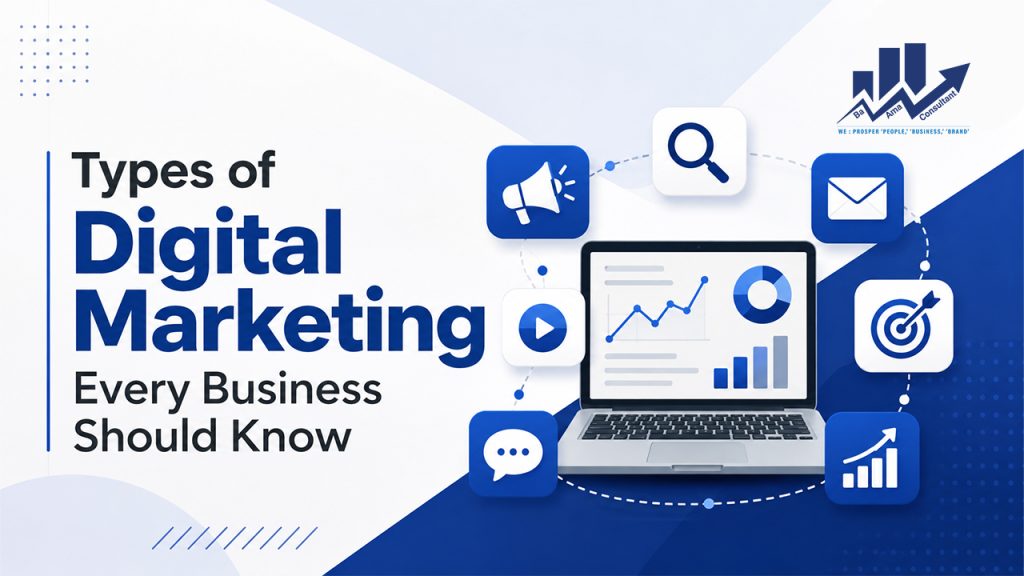
7 Types of Digital Marketing in Nepal
| Type of Digital Marketing | Best For | Example Use |
| SEO | Long-term organic visibility | Ranking service pages and blogs on Google |
| Local SEO | Nearby customers | Appearing in Google Maps and “near me” searches |
| Social Media Marketing | Awareness and engagement | Facebook, Instagram, LinkedIn, TikTok-style short videos |
| Content Marketing | Trust and education | Blogs, FAQs, videos, guides, case studies |
| Paid Advertising | Fast lead generation | Google Ads, Meta Ads, remarketing |
| Email and Messaging Marketing | Follow-up and retention | Newsletters, WhatsApp, Messenger, SMS updates |
| Video Marketing | Demonstration and storytelling | Reels, explainers, testimonials, product videos |
The best approach is usually a mix. For example, SEO builds long-term visibility, paid ads bring faster traffic, and social media supports brand recall.
Digital Marketing vs Traditional Marketing
| Factor | Digital Marketing | Traditional Marketing |
| Targeting | Can target by location, intent, interest, and behavior | Usually broader |
| Measurement | Easier to track clicks, leads, calls, and conversions | Harder to measure precisely |
| Budget Control | Can start small and adjust | Often needs higher upfront cost |
| Speed | Campaigns can be edited quickly | Changes take more time |
| Customer Interaction | Two-way communication through comments, forms, and messages | Mostly one-way communication |
| Best Use | Lead generation, education, retargeting, search visibility | Mass awareness, local presence, brand recall |
Traditional marketing still has value. Events, brochures, radio, billboards, and referrals can work well in Nepal. But for small businesses, digital marketing adds tracking, flexibility, and better audience control.
A Practical Digital Marketing Strategy for Small Businesses
Step 1: Define the Business Goal
The goal should be specific.
Examples:
- Increase appointment bookings
- Generate 50 qualified leads per month
- Improve local search visibility
- Increase online orders
- Build brand awareness in Kathmandu Valley
- Reduce cost per inquiry
- Improve repeat purchases
A clear goal helps choose the right channel.
Step 2: Understand the Customer Journey
Small business customers usually move through these stages:
| Stage | Customer Question | Best Content |
| Awareness | What problem do I have? | Educational blogs, videos, social posts |
| Consideration | Which service is right for me? | Comparisons, FAQs, service pages |
| Decision | Why should I trust this business? | Reviews, testimonials, case studies |
| Action | How do I contact or buy? | Landing pages, call buttons, forms |
| Retention | Why should I return? | Email, offers, updates, helpful reminders |
Marketing becomes stronger when each stage has useful content.
Step 3: Build a Search-Friendly Website
A website should be fast, mobile-friendly, clear, and structured.
Important pages include:
- Homepage
- About page
- Service pages
- Location page
- Contact page
- Blog section
- Testimonials or case studies
- FAQs
- Privacy policy
Each main service should have its own page. For example, one page for SEO, one for social media marketing, one for paid advertising, and one for website development.
This helps users and search engines understand the business better.
Step 4: Optimize for Local Search
Local SEO is important for small businesses in Nepal because many customers search by place.
Useful local SEO actions include:
- Create or optimize Google Business Profile
- Keep name, address, and phone number consistent
- Add business hours
- Upload real photos
- Collect genuine reviews
- Respond to reviews professionally
- Add location keywords naturally
- Create location-based landing pages
- Add map and contact details on the website
A local business should make it easy for customers to call, visit, or message.
Step 5: Create Helpful Content
Content should answer real questions.
Examples:
- How much does digital marketing cost in Nepal?
- What is the best marketing strategy for small businesses?
- SEO vs paid ads: which is better for small businesses?
- How can clinics use digital marketing responsibly?
- How do small businesses generate leads online?
- What should a business post on social media?
This type of content builds topical authority. It also supports AEO and GEO because AI search systems often prefer clear, structured, direct answers.
Step 6: Use Paid Ads Carefully
Paid ads can bring faster results, but they should not be used without a plan.
Before running ads, a business needs:
- Clear offer
- Defined audience
- Strong landing page
- Tracking setup
- Follow-up process
- Budget limit
- Conversion goal
Many small businesses waste ad budgets because they send traffic to weak pages or do not follow up quickly. A paid campaign should connect with sales action.
Step 7: Track and Improve Monthly
Digital marketing should be reviewed regularly.
A monthly report should answer:
- Which channel brought the most leads?
- Which keywords improved?
- Which pages converted best?
- Which ads wasted the budget?
- Which content performed well?
- What should be improved next month?
Growth usually comes from consistent improvement, not one-time posting.
Common Digital Marketing Mistakes Small Businesses Should Avoid
Mistake 1: Posting Without Strategy
Random posts rarely create business growth. Every content piece should support awareness, trust, lead generation, or retention.
Mistake 2: Ignoring SEO
Social media content can disappear quickly in feeds. SEO can keep bringing traffic over time when pages rank for useful searches.
Mistake 3: Sending Ad Traffic to a Weak Page
Ads cannot fix a poor landing page. The page must explain the offer clearly and make contact easy.
Mistake 4: Not Tracking Leads
A business should know whether leads came from Google, Facebook, Instagram, referrals, or ads. Without tracking, budget decisions become unclear.
Mistake 5: Expecting Instant Results From Every Channel
Paid ads may generate faster traffic. SEO and content usually take longer. Social media needs consistency. Each channel has a different timeline.
Mistake 6: Keyword Stuffing
Repeating keywords unnaturally can hurt readability. Google also warns against excessive keyword repetition. Consulting with an experienced SEO specialist is better than Google’s penalty.
Good SEO uses natural language, related terms, and helpful answers.
Best Digital Marketing Channels by Business Type
| Business Type | Recommended Channels |
| Clinic or healthcare service | SEO, local SEO, educational content, reviews, video, Google Ads |
| Training institute | SEO, social media, lead ads, YouTube/video, landing pages |
| Restaurant or café | Local SEO, Instagram/Facebook, reviews, short videos, offers |
| Retail store | Social media, local SEO, product content, remarketing |
| B2B service provider | SEO, LinkedIn, case studies, email, Google Ads |
| Travel or hospitality | SEO, local search, visual content, reviews, paid ads |
| Consulting firm | Thought leadership content, SEO, LinkedIn, case studies |
The right mix depends on customer behavior, location, budget, and sales cycle.
How BaAma Consultant Can Support Small Business Growth
BaAma Consultant Service is based in Lalitpur and offers digital marketing solutions, business consulting, and training programs. The company strongly focuses on healthcare and pharmaceutical industries, while also serving different business sectors.
For small businesses, this type of support can include:
- SEO strategy
- Website optimization
- Social media planning
- Content creation
- Paid advertising
- Brand positioning
- Lead generation campaigns
- Marketing consultation
- Reporting and performance improvement
A practical digital marketing service should connect marketing activity with business outcomes. That means focusing on leads, calls, bookings, visits, inquiries, and customer retention instead of only likes or impressions.
Key Benefits of Digital Marketing for Small Businesses
| Benefit | Why It Matters |
| Better visibility | Customers can discover the business through search, social media, maps, and content |
| Cost control | Campaigns can start small and scale based on performance |
| Measurable results | Businesses can track traffic, leads, calls, and conversions |
| Stronger trust | Reviews, useful content, and consistent branding improve credibility |
| Customer retention | Email, messaging, and remarketing help bring customers back |
These benefits are strongest when the strategy is consistent and based on data.
Final Thoughts
Digital marketing helps small businesses grow by making them visible, trusted, measurable, and easier to contact. For Nepali businesses, the opportunity is practical: customers are already online, mobile usage is high, and people increasingly compare options before making decisions.
The best results come from a balanced strategy. SEO builds long-term search visibility. Social media supports awareness and engagement. Paid ads help generate faster traffic. Content builds trust. Analytics shows what is working. Local SEO helps nearby customers take action.
Small businesses do not need to use every channel at once. They need the right channels, clear goals, helpful content, and consistent improvement.
When digital marketing is done properly, it becomes more than promotion. It becomes a growth system.
FAQs
How can digital marketing help small businesses in Nepal grow?
Digital marketing helps small businesses in Nepal grow by increasing online visibility, attracting local customers, generating leads, building trust through content and reviews, and measuring which campaigns bring real inquiries or sales.
How does digital marketing grow your business?
Digital marketing grows your business by reaching the right audience online, guiding them with helpful content, converting them through websites or landing pages, and improving campaigns using data.
Why is digital marketing necessary for business growth?
Digital marketing is necessary because customers search, compare, and make decisions online. Without digital visibility, a business may lose potential customers to competitors that appear on Google, social media, maps, and review platforms.
What are the 5 benefits of digital marketing?
The 5 benefits of digital marketing are better visibility, targeted reach, cost control, measurable results, and improved customer engagement.
What are 7 types of digital marketing in Nepal?
The 7 types of digital marketing in Nepal are SEO, local SEO, social media marketing, content marketing, paid advertising, email or messaging marketing, and video marketing.
Author: BaAma Consultant Digital Marketing Team
BaAma Consultant Service provides digital marketing solutions, consulting, and training services in Nepal, with experience supporting healthcare, pharmaceutical, and small business brands through practical online growth strategies.